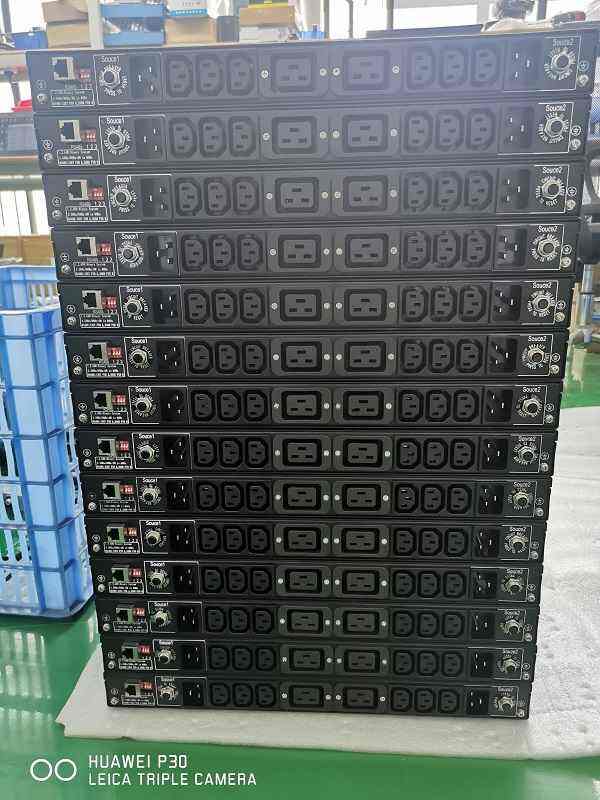
1. Electrical isolation: Relay can provide electrical isolation in the circuit, separating the control circuit from the controlled circuit to prevent interference and protect equipment.
2. Small current control for large current: A smaller control current can be used to control a larger load current, thereby achieving control over high-power equipment.
3. High reliability: The mechanical structure of the relay is relatively simple and there are no vulnerable moving parts, so it has high reliability and long service life.
4. Flexible control: The switch status of the relay can be controlled through various methods (such as electromagnetic, photoelectric, thermal, etc.) to meet different control requirements.
5. Good scalability: Multiple relays can be combined to achieve more complex control logic, facilitating system expansion and upgrading.
6. Standardization: Relays typically have standardized dimensions and interfaces, making them easy to replace and maintain.
7. Widely applicable: Suitable for various electrical control systems, such as automation, power, communication, automotive and other fields.
It is necessary to select appropriate relays based on specific application scenarios and requirements to fully leverage their advantages. Meanwhile, when using relays, attention should also be paid to their rated parameters and working conditions to ensure normal and safe operation.
Relay switches have the following advantages:
1. Electrical isolation: Relay can provide electrical isolation in the circuit, separating the control circuit from the controlled circuit to prevent interference and protect equipment.
2. Small current control for large current: A smaller control current can be used to control a larger load current, thereby achieving control over high-power equipment.
3. High reliability: The mechanical structure of the relay is relatively simple and there are no vulnerable moving parts, so it has high reliability and long service life.
4. Flexible control: The switch status of the relay can be controlled through various methods (such as electromagnetic, photoelectric, thermal, etc.) to meet different control requirements.
5. Good scalability: Multiple relays can be combined to achieve more complex control logic, facilitating system expansion and upgrading.
6. Standardization: Relays typically have standardized dimensions and interfaces, making them easy to replace and maintain.
7. Widely applicable: Suitable for various electrical control systems, such as automation, power, communication, automotive and other fields.
It is necessary to select appropriate relays based on specific application scenarios and requirements to fully leverage their advantages. Meanwhile, when using relays, attention should also be paid to their rated parameters and working conditions to ensure normal and safe operation.
Tags: The relay dual switching control switch has the following advantages
This GZDW series DC power panel is a robust and intelligent solution designed for 10–500kV substations, power plants, and industrial facilities. It provides reliable DC power for high-voltage switchgear, relay protection, automation systems, and emergency lighting. Key features include a plug-and-play design for rectifier and monitoring modules, an LCD controller with automatic battery management, and support for multiple communication protocols (RTU, CDT, MODBUS). The system accommodates…
– BWITT has issued its latest innovation in power management: the STS-380VAC Static Transfer Switch series. Designed for seamless and reliable power transfer, this new product line ensures uninterrupted power supply with a switching time of ≤4ms, making it ideal for critical applications in data centers, industrial automation, and telecommunications. The STS series features high-speed thyristors, an intelligent control board, and robust circuit breakers, operating on…
A communication inverter converts DC power (from batteries) into stable AC power for critical loads. Its working principle involves: 1. DC-AC Conversion: Using PWM (Pulse Width Modulation) and IGBT transistors, it transforms 48V/24V DC into 220V/110V AC. 2. Voltage Stabilization: Filters and regulators ensure clean, sine-wave output. 3. Synchronization: Aligns frequency/phase with grid or UPS for seamless switching. Integration in a Rack: - Batteries supply DC…
Bwitt’s STS Single Phase Static Transfer Switch has become a standout product at recent international exhibitions in Vietnam, Indonesia, Russia, and Turkey, earning widespread praise for its competitive pricing, reliability, and advanced features. Designed for power supply transitions, the STS ensures uninterrupted load operation by automatically switching to a backup source within ≤4ms during input abnormalities, making it ideal for critical applications. With a 16–125A…
Bwitt has launched the RCT-2000 Series, a modular 48VDC 50A rectifier system designed for telecom and industrial environments. With an impressive 93.2% efficiency and a wide AC input range of 90–290VAC, this "green" power solution supports applications like 5G base stations, SCADA networks, and railway systems. The system delivers 3000W output at 53.5VDC and features advanced protections, including overvoltage and short-circuit safeguards. Equipped with Modbus, RS485, and TCP/IP communication ports, the rectifier enables remote monitoring…